Showing posts with label Names. Show all posts

Friday, November 19, 2010

A Cowan Shoots A Palin On TV


The photo on the left, provided on Wednesday, November 17, 2010, by the Dane County Sheriff's Department shows Steven Cowan, and the one on the right is a publicity image of the target of Mr. Cowan's rage, Bristol Palin.

The man with an extremely Masonic name, Cowan* (meaning an intruder, a pretender, and an eavesdropper), has now popped up on the twilight language radar screen linked with a member of Sarah Palin's family. (The surname Palin is a name of English or Welsh origin. Possible derivations include an anglicization of the Welsh patronymic ap Heilyn ~ "son of Heilyn" ~ or a reference to the English placenames Poling, West Sussex or Sea Palling, Norfolk. In the Mabinogi of Branwen ferch Llŷr Heilyn fab Gwyn Hen is one of the seven men who escape the conflict in Ireland. With his fellows he accompanies the severed head of Bendigaidd Frân on its journey to the White Mount in London.)


Prosecutors say this rural Wisconsin man blasted his television with a shotgun after watching Bristol Palin's "Dancing with the Stars" routine.


According to court documents, 67-year-old Steven Cowan of the small town of Vermont in Dane County, Wisconsin, became enraged while watching Palin dance on Monday evening, November 15, 2010. He felt Palin was not a good dancer and he was fed up with politics. He went to his bedroom and returned to the living room with a shotgun and blasted his television, then reportedly pointed the gun at his wife, who managed to escape and call police. A SWAT team surrounded the couple's Wisconsin farmhouse and officers were able to talk Cowan out Tuesday, after an all-night standoff.

Cowan has been charged with second-degree reckless endangerment, a felony punishable by up to 10 years in prison and $25,000 in fines. It was unclear whether Cowan has retained an attorney.


Bristol Palin is shown holding her brother Trig, August 2008.


Sarah Palin, as Miss Wasilla, 1984, when she was 20, Bristol's present age.


Bristol Sheeran Marie Palin was born on October 18, 1990, and raised in Wasilla, Alaska. Her mother, Sarah Louise Palin (née Heath; born February 11, 1964), has explained that Bristol Palin's first name was chosen for the Bristol Inn where she (her mother) had been employed; Bristol, Connecticut, the headquarters city of ESPN, where Sarah Palin had hoped to work as a sportscaster; and the Bristol Bay region of Alaska, where Bristol's father, Todd Mitchell Palin (born September 6, 1964), grew up. Todd's mother Blanche Palin (née Kallstrom) is one-quarter Yup'ik, and his maternal grandmother, Helena (Bartman) Andree, is a member of the Curyung tribe. Besides working for BP oil in Alaska, Todd is also a commercial salmon fisherman at Bristol Bay on the Nushugak River.


Starting in 2005, Bristol Palin (right) attended Juneau-Douglas High School and began dating Levi Johnston (above, left). In 2008 she moved to Anchorage to live with her aunt and uncle and attended West Anchorage High School. She returned to Wasilla and graduated from Wasilla High School in May 2009.

Palin and Johnston's son, Tripp Easton Mitchell Johnston, was born on December 27, 2008. The couple, which had become engaged during the 2008 presidential campaign, broke off their engagement in March 2009.


Palin joined the Fall 2010 season of "Dancing with the Stars." Her partner is professional Mark Ballas, who is a two-time champion on the show, having won with Kristi Yamaguchi, in season 6, and with Shawn Johnson in season 8. Palin's first dance was a cha-cha to "Mama Told Me Not to Come" by Three Dog Night, seen as a humorous reference to Sarah Palin.

Her successful run on the show has not been without controversy. For example, there was widespread media coverage of her failure to turn in her absentee ballot for the November 2010 general election, which she said was due to her dancing rehearsal schedule.

There has been speculation regarding her unexpected success on the show from public voting, when the judges have frequently given her lower scores than opponents. This speculation has included allegations of fraudulent online voting using multiple e-mail addresses. Executives at ABC and the show's executive producer, Conrad Green, have stated that "checks and balances" in the system, including IP address verification, prevent such voting practices, and that "[t]here's nothing in the voting that looks dissimilar to previous seasons."

Green has speculated that Palin received votes for political reasons by backers of Sarah Palin in the Tea Party movement. In addition to support from older viewers who felt maternal toward Palin and empathized with her lack of prior experience. Palin herself credited her success to the support of her fans who were tuning in each week to see her improvement.


*Definition of COWAN:

This is a purely Masonic term, and signifies in its technical meaning an intruder, whence it is always coupled with the word eavesdropper. It is not found in any of the old manuscripts of the English Freemasons anterior to the eighteenth century, unless we suppose that lowen, met with in many of them, is a clerical error of the copyists. It occurs in the Schaw Manuscript, a Scotch record which bears the date of 1598, in the following passage: "That no Master or Fellow of Craft receive any cowans to work in his society or company, nor send none of his servants to work with cowans." In the second edition of Anderson's Constitutions, published in 1738 (page 146), we find the word in use among the English Freemasons, thus : ''But Free and Accepted Masons shall not allow cowans to work with them ; nor shall they be employed by cowans without an urgent necessity; and even in that case they must not reach cowans, but must have a separate communication." There can be but little doubt that the word, as a Masonic term, comes to us from Scotland, and it is therefore in the Scotch language that we must look for its signification. Now, Jamieson, in his Scottish Dictionary, gives us the following meanings of the word: Cowans.

A term of contempt ; applied to one who does the work of a mason, but has not been regularly bred.
Also used to denote one who builds dry walls, otherwise denominated a dry diker.

One unacquainted with the secrets of Freemasonry.

And he gives the following examples as his authorities:

A boat-carpenter, joiner, cowan (or builder of stone without mortar), get ls. at the minimum and good maintenance. P. Morven, Argyles. Statistic, Acct., X, 267. N.

Cowans. Masons who build dry-stone dikes or walls. P. Halkirk, Carthn, Statistic. Acct., XIX, 24. N. In the Rob Roy of Scott, the word is used by Allan Inverach, who says:

She does not value a Cawmill mair as a cowan.

The word has therefore, in the opinion of Brother Mackey, come to the English Fraternity directly from the Operative Freemasons of Scotland, among whom it was used to denote a pretender, in the exact sense of the first meaning of Jamieson.

There is no word that has given Masonic scholars more trouble than this in tracing its derivation. By some it has been considered to come from the Greek meaning a dog; and referred to the fact that in the early ages of the Church, when the mysteries of the new religion were communicated only to initiates under the veil of secrecy, infidels were called dogs, a term probably suggested by such passages as (Matthew vii 6), "Give not that which is holy unto the dogs"; or (Philippians iii 2), "Beware of dogs, beware of evil workers, beware of the concision'' (see also Revelations xxii 15). This derivation has been adopted by Oliver, and many other writers.

Jamieson's derivations are from the old Swedish kujon, kuzhjohn, meaning a silly fellow, and the French coion, coyon, signifying a coward, a base fellow. No matter how we get the word, it seems always to convey an idea of contempt. .The attempt to derive it from the chouans of the French Revolution is manifestly absurd, for it has been shown that the word was in use long before the French Revolution was even meditated.

However, Brother Hawkins points out that Doctor Murray in the New English Dictionary says that the derivation of the word is unknown.

Notwithstanding the above reference by Brother Hawkins we may venture to consider another objective.

- Source: Mackey's Encyclopedia of Freemasonry.


For a related posting about a "cowan-synchronicity," please see here.


[Hat tip to Adam Parfrey of Feral House for alerting me to the original news item.]

Thursday, January 29, 2009

Lam's Sacrifice


This event exudes elements requiring some in-depth twilight language decoding. First there are the overt names that catch one's attention: "King" (as in the county), "Queen Anne" (being the apartment complex), and "Gross" (the prosecutor's graphic moniker which vividly describes the scene itself).

In almost a revelation of the process, even "an unidentified language" is found in this tale.

More twilight-dwelling, perhaps, but needless to say much more covertly, there is this ritual sacrifice's suspect with the given name of "Oumar Lam." It is a name that allows various anagrams, of course, but it should be mentioned that one is "Amoral MU," alluding to the vanished continent, located in the Pacific Ocean but now, like Atlantis and Lemuria, said to have sunk beneath the sea.

More significantly, researcher Richard Hendricks, whom I fully credit for passing word of this incident to me, notes the following:

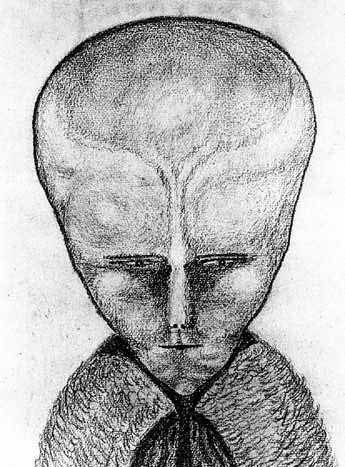
"Between January & March, 1918, Aleister Crowley performed a series of magickal rituals, the Amalantrah Workings, while in New York. One of his goals during this series of rituals was to bring an intelligence into physical manifestation. He claimed he did, and drew a celebrated portrait of the being he said he conjured. That intelligence, of course, was Lam, whose resemblance to alien greys and other paranormal entities has been noted since. At any rate, the story below caught my eye: rituals; chanting; the man 'yelling in an unidentified language.' his last name, Lam."


It is quite easy to find more about the overlap between the facial features of "Lam" and the "greys," if you wish, e.g. here and here.

But for the moment, however, merely read the following, which took place this week, kindly shared by Mr. Hendricks:

King County prosecutors filed assault charges Wednesday [January 28, 2009] against a Seattle man accused of attempting to "sacrifice" his live-in girlfriend.

According to police, Oumar Lam's 26-year-old girlfriend arrived at their Queen Anne apartment Sunday to find him lying naked on a couch near a candle-lit altar. The woman told police she was seated on a bed when Lam attacked her from behind, pulling a pillowcase over her head and attempting to suffocate her.

Pulling her head back, Lam, 31, allegedly sliced the woman's throat while yelling in an unidentified language, according to court documents. She told police she attempted to break away from him as he pulled her toward the altar, at which he had apparently been praying for hours before her arrival.

Police assert that Lam continued stabbing her during the struggle, cutting her chest, back and shoulder before she was able to dial 911. The woman, police said in court documents, "was extremely fearful that Lam was trying to kill her as part of a sacrifice."

The woman told police he was ranting to himself throughout the attack.

"Die, die and go alone," Lam said repeatedly, according to police reports. "You have to go by yourself."

The woman fled the apartment, pursued by a still-nude Lam, according to police. Lam dragged her back to the apartment.

Weakened from blood loss, the woman was still able to rush to the door when officers knocked. According to police, Lam continued to chant when confronted by officers.

On Wednesday, prosecutors filed a first-degree assault charges against Lam, with sentencing enhancements for domestic violence and the use of a deadly weapon. Requesting that bail be set at $1 million in the attack, Deputy Prosecutor David Gross described the incident in court documents as a "vicious attack (that) shows that the defendant is an immeasurable threat to the community."

The woman underwent emergency surgery at Harborview Medical Center after the incident and is expected to survive.

Bail has not been set in the case because Lam, who remains in the King County Jail, has refused to attend two hearings. He is scheduled to be arraigned Feb. 11 and faces 10 to 13 years in prison if convicted.


Source: "Charges filed in man's attempted 'sacrifice': Girlfriend survives stabbing attack on Queen Anne," by Levi Pulkkinen, Seattle Post-Intelligencer, January 29, 2009.

Friday, December 19, 2008

Synchromysticism's Godfather

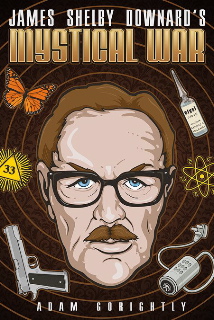
Adam Gorightly's newest book documents the remarkable phantasmagoria that was the person named James Shelby Downard, an American theorist and pamphleteer who shared his thoughts about conspiracies, coincidences, synchronicity, and symbolism.


James Shelby Downard's Mystical War was released by Virtual Bookworm Publishing, in November 2008. The subject of the book, Downard, lived from March 13, 1913 to March 16, 1998, unless, of course, his death was a disappearing act and he's still alive somewhere, writing under an assumed name. (I'm joking, right?)

Downard appeared on the scene when many of my contemporaries and I were just beginning to have lexilinked thoughts and overlapping insights into coincidences. His influence, as Gorightly notes, today has spread far beyond this strange man's life and death.

I easily understand the reach of Downard's impact within my own life from this twilight realm. In the 1960s and 1970s, first in correspondence, and then later in Fortean Times columns, I wrote about the connections I found between names and weirdnesses. Some of those writings appeared (see Devil Names and Fortean Places) in my 1983 book, Mysterious America, along with another chapter, entitled "Name Game."

In the beginning, I pointed to names such as Devil, Diablo, Manitou, and Hockomock for locations, and people names like Hobbs and Wetzel to watch. These were early explorations on the edges of what today is a vast journey in onomatology (the study of names) and toponomy (the study of places).

In the 1960s, John A. Keel carried on a lively correspondence with me and others, in which he examined the frequent appearance of certain proper names, like Reeves/Reaves, McDaniel, Hill, Allen, Maddox, and Heflin, as eyewitnesses of anomalistic incidents.

Soon, I was also corresponding with Bill Grimstad and Michael Anthony Hoffman II, who were close associates of Downard. Many people feel they got letters from Downard, but mostly, it was Hoffman and Grimstad who were assisting in getting Downard's thoughts and words to the rest of us.

Exchanging ideas with Grimstad, about locations linked to Fayette and LaGrange, and names like Bell, Mason/Macon, Pike, Warren, and Lafayette, all went hand in hand with being a Fortean in the 1960s-1970s, especially if an interest in assassinations and strange suicides fit into the mindset.

Hoffman, who authored the modern notion of the twilight language (versus the ancient Buddhist understanding of the phrase) and Grimstad, who was the source of the Fayette factor, were interesting and stimulating correspondents who nicely intellectualized many of Downard's ideas. Hidden meanings were there for the finding, and Hoffman, Grimstad, and Downard were the miners.

James Shelby Downard, who wrote short tracts, which later were published in various anthologies from Adam Parfray at Feral House, examined his own perceived decodings behind historical events in the 20th century, on a parallel track to what was happening with Forteans, anomalists, and demonologists. Downard's approach was mostly cryptopolitical, and some of us drifted over into his world, as often happens in attempting to get a holistic view of history and current events.

How does a biographer working with a secretive subject capture the life of the hidden one? That was Gorightly's task.

As you begin to read this new book about Downard, you might think that you have opened a cryptocomedic LSD trip about a conspiracy-oriented Forrest Gump-like character, who amazingly finds himself in all the wrong places at the wrong times.

Gorightly escorts the reader abroad a rollercoaster ride in which Downard is a Freemason scapegoat being ritualistically abused, watching the KKK hang a person at a crossroads, seeing Alexander Graham Bell receiving homoerotic sex magik fellatio, visiting J. Edgar Hoover's office, and getting a phone call from FDR.

The opening sections of the book are so breathlessly delivered that by the time I arrived at the chapter noting that Downard was at the "first ever meeting of the Baker Street Irregulars on July 5, 1934" in a New York City eating establishment, I hardly was startled by the statement.

All of this made me flashback to what Gorightly observed in his second paragraph of the book: "Some cynics have gone so far to suggest that Downard never actually existed, the group creation of Michael Hoffman, William Grimstad and Adam Parfrey."

Indeed!

The publisher's tagline for James Shelby Downard’s Mystical War, tells us that author Adam Gorightly "chronicles the famed conspiracy researcher’s life long battles against Masonic Sorcery as an investigator and exposer of the Science of Symbolism, Onomatology and Mystical Toponomy."

Well, yes, but what is real and what are Downard's fantasies? We clearly can't tell from Gorightly's text, because, of course, who knows?

The book is an odd mix, at points, of biographical tales about Downard's unbelievable life, his intellectual perceptions in symbol decoding, and details of specific historical milestones along the twilight highway.

When you realize that James Shelby Downard's first published work was only released in 1979, via the short work, The Masonic Assassination of John Fitzgerald Kennedy, you do come to grips with the fact his overall output was limited, but powerful.

Downard's refined and well-edited King-Kill 33° had everything to do with the skills of Michael Hoffman channeling Downard. Combined with Grimstad's Sirius Rising reel-to-reel tapes of conversations with Downard, the two works had a ripple effect. “King-Kill/33: Masonic Symbolism in the Assassination of John F. Kennedy” eventually was published by Adam Parfrey in the first edition of the book Apocalypse Culture. The essay theorizes the Freemasons were responsible for the assassination of President John F. Kennedy.

Grimstad, writing even before it was published, was able to walk a wonderfully skeptical open-minded fence, as he passed along the following summary of Downard's JFK insights in Weird America in 1978:

Would you believe John F. Kennedy as a ceremonial king-who-must-die? I'm afraid there is a certain body of opinion, undoubtedly the farthest-out brain wave of assassinology yet, that maintains the killing was pulled off, not by the Russians, the Cubans, the CIA, or the Mafia, but by alchemists.

As I understand the hypothesis, President Kennedy was for some reason chosen as The King (remember "Camelot," "Macbird" and all that?) after the fashion of James G. Frazer and Mary Renault whose "The King Must Die" he had been given to read before his death. This killing of the king in Dallas was related somehow to the touching off of the world's first atomic bomb at the Trinity Site in New Mexico 18 years earlier. Apparently the Bomb was the "destruction of primordial matter" stage of the grand alchemical working, but these conspiracy buffs aren't much more specific on details than were the early alchemists in their recipes. Anyway, Kennedy represented the next stage of the process - the "Death of the White King" - when he was immolated on a trinity site of his own. For, aren't Dealey Plaza and the ill-famed Triple Underpass on the bank of the old Trinity River?

William Grimstad


Popular cultural outlets, such as Robert Anton Wilson's works (e.g. Cosmic Trigger), the music of Marilyn Manson, and the various books and movies about the numbers 23 and 33, have Downard living onward into the morrow. My own books, including The Copycat Effect, show Downard influences.

Everyone has the sense they "discovered" the significance of certain names or dates, or even factoids like Dealey Plaza being the first Masonic temple in Texas, but remarkably, most of these revelations track back to Downard.


Adam Gorightly, who authored the underground classic, The Prankster and the Conspiracy: The Story of Kerry Thornley and How He Met Oswald and Inspired the Counterculture (with its foreword by Robert Anton Wilson), is a good person to be at the wheel for this biography of Downard. Oh, I wish it would have been twice as long, but I understand how difficult it is to write biographies of people that do not wish to be known.

Gorightly's book does an excellent job, nevertheless, in opening the door to a comprehensive world of symbol decodifications that may be new to many people. Today, there is much 21st century intrigue involving Downard's legacy, in new areas such as synchromysticism.

Several writers and commentators, including Todd Campbell, Robert Schneck, Theo Paijmans, SMiles, Michael Janitch, Mike Gos, Goro Adachi, Greg Bishop, Ben Fairhall, Henrik Palmgren, Richard Hendricks, Craig Heimbichner, Christopher Knowles, Fredrik Palmgren, Anthony Sutton, Kenn Thomas, the late Jim Keith, the late Ron Bond, and Jake Kotze inhabit the netherworld of conspiracies and synchromysticism, with the later being "an emerging field of study and subculture existing on the fringe of areas already considered fringe – primarily mysticism and Jungian psychology."

The word "synchromysticism" was first coined by Jake Kotze in August 2006, on his website-at-the-time, Brave New World Order. Kotze defined the concept as: "The art of realizing meaningful coincidence in the seemingly mundane with mystical or esoteric significance."

Downard's modern influence on Forteana, assassination studies, occult symbolism decoding, twilight language research and synchromysticism is so deep that he must be acknowledged as the Godfather to many of the points of view that inhabit those arenas.

I'm not sure if I take even half of what Downard wrote about as reality, but to get caught up in that intellectual side trick in critical thinking misses the point. In realizing the reality behind the twilight language, the metaphor is the method and the Downard as revealed by Gorightly is the message.


Greg Bishop, Farah Yurdozu, Nick Redfern, and Adam Gorightly somewhere near Roswell, on 07/09/07. Photo by Sigrid Hudson.

Glossary ~ James Shelby Downard examined the world through a variety of methodologies, including the following:

Onomastics or onomatology is the study of proper names of all kinds and the origins of names. The word is Greek: ὀνοματολογία (from ὄνομα (ónoma) "name").

Toponymy or toponomastics, the study of place names, is one of the principal branches of onomastics.

Anthroponomastics (or Anthroponymy), a branch of onomastics, is the study of anthroponyms (anthropos, 'man', + onuma, 'name'), the names of human beings.

Etymology is the study of the history of words — when they entered a language, from what source, and how their form and meaning have changed over time. In languages with a long detailed history, etymology makes use of philology, the study of how words change from culture to culture over time. The word "etymology" itself comes from the Ancient Athens ἐτυμολογία (etumologia) < ἔτυμον (etumon), “‘true sense’” + -λογία (-logia), “‘study of’”, from λόγος (logos), "speech, oration, discourse, word."