Showing posts with label suicide clusters. Show all posts

Tuesday, May 8, 2012

Seau's Suicide Euphoria

After hearing sports news commentators talk about a subject they are misreading, it is time to revisit the subject of Junior Seau's suicide. Speculation is one thing, and has been wild. But there is no reason to not look at his suicide based upon science.

Much decoding occurs when forensically examining suicide after the fact, of course, and no one really knows what a suicidal individual is thinking. Their thought processes are confused, so for relatively normal human beings to try to figure out what caused the suicide is difficult. Nevertheless, from the research, interviews, and decades of suicidology (the formal study of suicide), a few insights can be shared.

Junior Seau's SUV, October 2010.
Let us look, therefore, first, at one important piece of obvious misinformation being shared about suicide, suicide ideation, and the hidden signs of suicides concerning Junior Seau's suicide.

One of the most common items heard from sports newscasters and sports talk radio personalities when talking about the topic of Junior Seau's suicidality has been this kind of comment, "All those who knew him said he has been so cheerful in recent weeks; certainly this means he's wasn't suicidal."

Not true. Suicide is about an escape from the pain, real or imagined, in the suicidal person's life. Once the desire has been made to take one's own life, the suicidal individual often exhibits an unusually notable upturn in their mood, a time of what I call "suicide euphoria."

Here is what I wrote for the State of Maine about the relatively unknown condition of "Suicide Euphoria":

Sometimes depressed, despondent, angry, or agitated individuals consider, and then finalize, suicidal thoughts that may become a defined “suicide plan.” Once this occurs, the behavior in a potentially suicidal person may appear as “suicide euphoria” by an observer. This “feeling” of great happiness or well-being is based on the idea that very soon “no pain” will exist for the suicidal person. This state of euphoria may fool helpers and gatekeepers who are thinking that a “flight into health” is taking place for the individual. Friends and families of suicide victims are often confounded with a sense that this was not a suicide because of the cheerfulness of a person expressing this euphoria. When the action of suicide is planned, the vulnerable person may actually be appear calm, and demonstrate short periods of hard to understand happiness.
Junior Seau's suicide was thoughtfully completed. He called his children and left goodbye messages of love to them.

Methods and timing of suicides are important clues to decoding suicides. Seau's choice of the high lethality method of a gun, combined with the specific placement of the shot to his chest, was a direct copycat of the suicide of David Duerson on February 17, 2011. Duerson inflicted a self-inflicted gunshot to his chest and sent a text message to his family saying he wanted his brain sent for research to the Boston University School of Medicine to study it for chronic traumatic encephalopathy (CTE) caused by playing professional football.

Seau purposely shot himself in his chest to make certain his head (and thus his brain) was not damaged, so testing could occur. He was sending a nonverbal message to his family and friends.


Junior Seau, Ray Easterling, David Duerson. Photo: TMZ.

It also, no doubt, was not lost on Seau that on April 19, 2012, ex-NFL football player Ray Easterling killed himself.

The timing of Junior Seau's previous suicide attempt is telling, as well, that Seau was aware of the deaths of his peers. Seau drove his white Cadillac SUV off a coastal cliff at Carlsbad, California hours after he was arrested on suspicion of domestic violence, on Monday morning, October 18, 2010. It is to be noted that NFL player Kendrick L. McKinley had killed himself on Monday, September 20, 2010, exactly a month before Seau's probable attempted suicide.

His suicide has resulted in some good insights from a few writers. But most have added more confusion than clarity.

Suicide euphoria, behavior contagion, and copycat behavior are all underpinnings of the Junior Seau suicide that are being ignored in mainstream sports discussions of this self-death. Seau's suicide will not be the last among former NFL players, and this will be especially true if people don't get the message he was trying to send.

There is a map among these deaths, and it is time to start reading it.

++++
For first timers here, I know a bit about suicide. I have directed a few federal research projects on the topic, directed some documentaries on the hidden warning signs, written a few books (e.g. Suicide Clusters) and manuals on suicides and suicide prevention, and delivered trainings and consultations to over 10,000 professional and paraprofessionals about the factors in prevention and postvention events related to self-deaths.


Previously, my research on baseball suicides was highlighted in "Donnie Moore and the Burdens of Baseball," New York Times, July 30, 1989, and "The Moore Tragedy," Sports Illustrated, July 31, 1989. Just as Major League Baseball did in 1989, NFL football is now in a similar period of deep introspection.

Friday, April 20, 2012

Russia's Copycats


Pavel Astakhov, the Russian Children Rights Commissioner, said the government must immediately act to prevent and contain the alarming rash of teenage suicides in the country.

Could, perchance, the awareness that I was hoping for in 1987 with Suicide Clusters and in 2004 with The Copycat Effect is finally sinking into the editorial rooms of the global media? 

There have been at least seven cases of teenagers killing themselves by jumping from buildings in Moscow and its environs in the last six weeks alone.

At least in...
Russia has been hit with a wave of copycat teenage suicides so pronounced that President Dmitri A. Medvedev felt compelled on Thursday to warn news media outlets against making too much of the deaths, for fear of attracting more imitators.
“It is indeed very alarming and serious, but it does not mean that it is a snowball that will become bigger and bigger every year,” Mr. Medvedev said. “This must be treated extremely gently.”
The spike in teenage suicides began in February, when two 14-year-old girls jumped hand in hand from the 16th-floor roof of an apartment building in suburban Moscow. Afterward, a series of apartment jumps attracted national attention.
Over 24 hours starting on April 9, there were at least six deaths. A girl, 16, jumped from an unfinished hospital in Siberia, while five others hanged themselves: a boy, 15, who died in the city of Perm two days after his mother found him hanging; another 15-year-old, who killed himself on his birthday, in Nizhny Novgorod, a city on the Volga River; teenagers in the northern city of Lomonosov and in Samara; and a 16-year-old murder suspect who used his prison bedsheet to kill himself in Krasnoyarsk.
There have been at least 10 more cases in the past week, including a boy, 11, found hanging under the roof of his house in Krasnodar.
The rest of the New York Times article, "In Russia, Spate of Teenage Suicides Causes Alarm," can be read here.

A version of the above noted article appeared in print on April 20, 2012, on page A4 of the New York edition with the headline: "A Spate of Teenage Suicides Alarms Russians."

One question for the New York Times: Where are the telephone numbers and weblinks for local or national suicide prevention hotlines at the end of your copycat suicides article (as per the US federal guidelines)?

It is as easy as this, 
National Suicide Prevention Lifeline

Call 1-800-273-TALK or Chat

Wednesday, January 20, 2010

VA: 8 Dead

The number of shooting incidents has increased dramatically in the USA since the Fort Hood incident. Whether the reasons are the copycat effect, behavior contagion, media reporting increase, or coincidence doesn't matter. It is happening and we are in the midst of a major cluster. Another shooting has occurred.

On Tuesday, January 19, 2010, a gunman went on a "rampage" (as the media is terming it) in the Virginia, killing eight people and shooting a police helicopter taking part in a hunt for him, officials said. A 39-year-old man was believed to be surrounded early Wednesday after the shootings in a rural district near Appomattox (where the surrender of Confederate General Robert E. Lee took place, ending the Civil War) in southern Virginia. Police confirmed that there were eight dead.

The suspect, named as Christopher Speight, shot a helicopter that was called to the scene at least four times, forcing it to make an emergency landing, officials said.

[Some of the first settlers in America with this family name, Speight, or its variants, were Frances Speight who settled in Virginia in 1642; William and Mary Speights plus their daughter Elizabeth in Barbados in 1678; and Christopher Speight in New England in 1760. The family motto is "by strength and valor." One of the more well-known holders of the name was Englishman Mark Warwick Fordham Speight (August 6, 1965 – April 7, 2008), who was an English television presenter, who once played the "Abominable No Man" in Timmy Mallett's Timmy Towers. On the afternoon of January 3, 2008, Speight called emergency services after waking up to discover fiancée Natasha Collins's body in the bath of their St John's Wood flat, in northwest London. He was originally arrested and charged with her murder. An inquest later determined Collins had died of a drug overdose and severe burns from hot water. Then on April 7, 2008, Speight was reported missing and soon found that he had died by suicide by hanging near Paddington Station. He left suicide notes saying he could not live without Collins.]

"More than 100 deputies, officers and state troopers will continue working through the night to locate and apprehend the armed subject" Virginia State Police said in a statement.

The incident unfolded around noon on Tuesday when a deputy from the Appomattox sheriff's office responded to an emergency call about an injured man lying on a country road.

"When the deputy arrived on scene, the deputy heard several gun shots," Sergeant Thomas Molnar, a spokesman for the Virginia State Police told AFP.

As the victim was being airlifted to a nearby hospital, where he later died, officers found four bodies outside a nearby home and "three bodies inside the residence."

The victims were male and female, according to police.

The shootings were said to be the act of a lone gunman, who was pinned down by police in nearby woods late Tuesday, officials said.

A nearby residence was evacuated as the manhunt grew ever tenser.

"The perimeter has been established and we believe the suspect is within the quarantined area," Molnar said.

A motive for the attacks was not immediately clear.

Thursday, February 5, 2009

Suicidal Dwarfs, Jokers And All That

A subtle pivotal point in the case unfolding in Dendermonde hit me soon after the authorities had searched through the little old Flemish streets and then took Kim de Gelder into custody. The revelation, not too surprisingly, came to me that the entire scenario had literally unfolded like a film.


The events of the Joker killer who came calling at the "Fabeltjesland" (fairyland) crèche (daycare) took a twist into the phantasmagoria between reality and cinema at one specific temporal spot in the news.

Perhaps you caught it too?

The police arrested the assumed killer, who worn makeup like Heath Ledger's Joker from The Dark Knight (Gelder = Ledger). Then they placed him in custody in Bruges.

What? A joker kills kids in a daycare nursery named "Fabeltjesland" and the authorities take the supposed baby killer to the "fairytale-like" city of Bruges.


My stream-of-consciousness flowed roaring along much like the rumblings heard in the River Dender. Hairy waters, indeed.

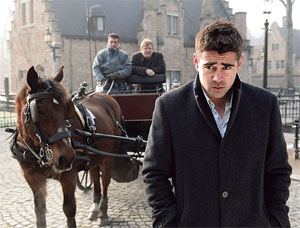
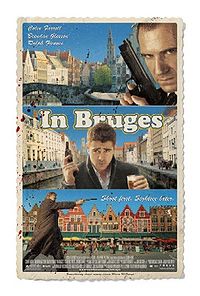
The 2008 movie In Bruges served as a flashpoint, instantly, for me. I had to re-visit this cinematic masterpiece.


The film stars Colin Farrell (as Ray), and he won the 2008 Golden Globe Award for Best Actor in a Musical or Comedy for his role. Brendan Gleeson, who was also nominated, is Farrell's hitman partner (as Ken) in hiding, with Ralph Fiennes (Harry Waters, yes, pay attention throughout this film) as their mobster boss.

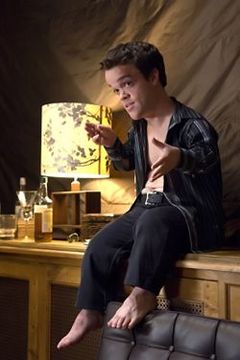
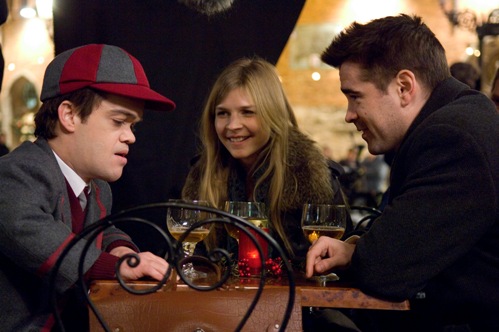
Ray's quick girlfriend, Chloë (Claacémence Poaacésy) and the little person movie-within-the-movie actor, Jimmy (Jordan Prentice), are important too. The film takes place, needless to say, within the Belgian city of Bruges, which is perhaps the film's other most significant character.

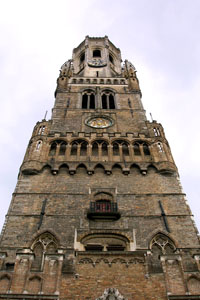
Belfry, the belltower (!), in Bruges.

For anyone who has watched In Bruges, in depth, you will appreciate the various levels that screenwriter Martin McDonagh has embedded into this film. He both wrote and directed it, so he seems to have known what he wanted us to see. I think there's even more there too. Obviously, the man is a genius, which has already been proven from his plays. For filmgoers and critics, his full-length movie screenwriting and directing debut may be appreciated more and more, with each repeated viewing.


But before I mention some symbolic items of note within In Bruges, let me bring your attention to the film's biographical overlap with Heath Ledger. The film's acclaimed Anglo-Irish playwright Martin McDonagh is the brother of John Michael McDonagh. The two lads use to have writing contests of their own making.

Paul Byrnes' powerful Australian review of In Bruges shares biographical insights.

"Martin McDonagh is living proof of the power of Australian television soaps. That is what he watched every day during the year of intense writing that produced his first six plays," writes Byrnes in The Sydney Morning Herald.

One can reflect with wonder on parts of people's biographies.

Byrnes continues: "McDonagh is the London-born son of Irish parents. They went back to the west of Ireland when he was 16 (about 1986). He and his brother stayed in London, visiting their parents during the summers. In London the two brothers lived mostly on the dole, challenging each other to writing competitions. They would watch Australian soaps in the morning, then go to separate rooms to write for the rest of the day."

What resulted was rather remarkable. Martin produced two trilogies: the Leenane trilogy, and the Aran Islands trilogy. His brother, John Michael McDonagh, today, we know, adapted Robert Drewe's book for the later film version of Ned Kelly.

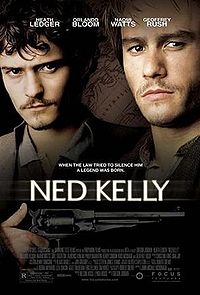
Ned Kelly is an Australian film directed by Gregor Jordan. The movie portrays the life of Ned Kelly who was a well-known bushranger in Australia, and is mainly based on Robert Drewe’s book Our Sunshine.

And who starred as Ned Kelly in that film? The poster tells the story, doesn't it? Or your memory of that film may? The answer is Heath Ledger. There, in one short leap we are back to Ledger, and the whole continuing synchrometaphor that is In Bruges.


More from Byrnes: "McDonagh is a huge fan of Nic Roeg's classic 1973 film Don't Look Now, which was set in Venice. That film was about a couple grieving after the death of a child; in a strange kind of way, that's also the subject of In Bruges."

(Colin Farrell's been "here" before, so to speak. The Irish feature film Intermission, starring Colm Meaney and Colin Farrell, references Don't Look Now's chase of a small figure in a red coat several times in that film.)

In Bruges's homage to Don't Look Now is a thread in the film in various ways, like the hints, now and then, of a child jumping in the square, dressed in red, or in the movie's final chase scene among the canals, old buildings, and such. McDonagh even writes it into the dialogue.

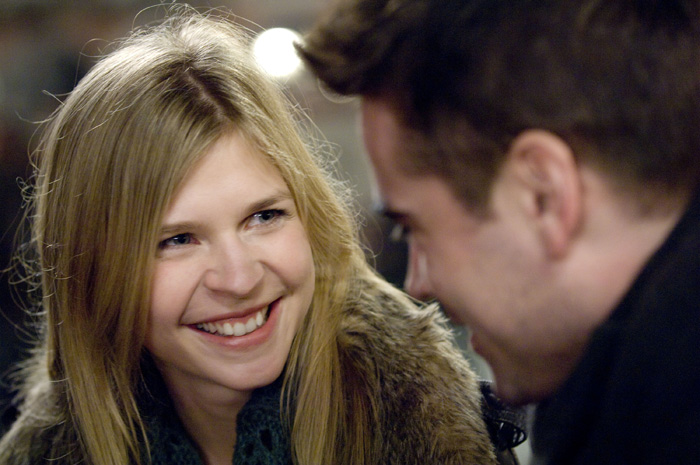
There's a scene when Ray is meeting Chloë, for the first time. Chloë says the Belgian film that is shooting there is like "Nic Roeg's Don't Look Now."

The film-within-a-film is said to have dream sequences, and the costumed fairies, trolls, and all are shown. Jimmy is one of the characters being filmed in that Don't Look Now-like motion picture or "Euro-trash," as his character calls it. (For recent links I've made between The Wicker Man and Don't Look Now, click here.)

McDonagh is hiding most all of this in plain sight.

And here, now, sitting literally, in Bruges today is Kim de Gelder, admitted killer of children in a fairyland daycare in Belgium.

In Bruges has a scene showing the two lead characters visiting an art museum. Byrnes comments on this, as has a lot of movie critics. "The second primary influence is a painting - The Last Judgement by Hieronymus Bosch. The two men look at it in a museum, musing on the meaning of hell and purgatory," notes Byrnes.

But does anyone notice what painting the film shows right before The Last Judgement at the Groeninge Museum? It is one with the vivid scenes of at least two decapitations. Kim de Gelder's killing of a boy and a girl, plus their caregiver, in Dendermonde was proceeded, in reality, by the decapitation at Virginia Tech. The Commonwealth of Virginia beheading also served as a harmonic link to the last wave of killings that occurred in the fall of 2006 at Dawson College (by Kimveer Gill) and the Amish school (among others), seemingly ending in the spring of 2007 at VA Tech.

In Bruges, at its core, it is about the killing of the "little boy," a phrase often stated that serves as a sort of framing around the entire tale. Reality and fantasy, the news and movie fiction, merge back and forth with In Bruges. And sitting in Bruges was Kim de Gelder after the fairytale daycare killings.

Ken: [looking at a surreal Bosch painting] It's Judgment Day, you know?
Ray: No. What's that then?
Ken: Well, it's, you know, the final day on Earth, when mankind will be judged for the crimes they've committed and that.
Ray: Oh. And see who gets into heaven and who gets into hell and all that.
Ken: Yeah. And what's the other place?
Ray: Purgatory.
Ken: Purgatory... what's that?
Ray: Purgatory's kind of like the in-betweeny one. You weren't really shit, but you weren't all that great either. Like Tottenham.
[pause]
Ray: Do you believe in all that stuff, Ken?
Ken: About Tottenham?

What about Tottenham?

The down and out north London location may be a sort of Purgatory to folks there, and certainly in history it is known for a notable mirror of this movie.

The Tottenham Outrage was the name given to an armed robbery and double murder in Tottenham, north London on January 23, 1909. Two Latvian anarchists, both armed with pistols, stole the wages as they were being delivered to Schnurmann's Rubber Company on Chestnut Road, almost literally across the street from the Tottenham Police Station.

In their attempts to get away the two robbers, Paul Hefeld and Jacob Lepidus (or Lapidus), started a chase and shooting spree that resulted in two deaths, police officer William Tyler and a 10-year-old boy named Ralph Joscelyne.

The robbers fired more than 400 bullets as they were being pursued along a river bank, through a marshy area, and among old buildings. When they were cornered, they turned the guns on themselves, dying by suicide.

The "Outrage," whether Martin McDonagh knew it or not, sounds an awfully lot like In Bruges. Finally, in a moment of one can start a circle, beginning anyway, the Tottenham Outrage events were commemorated long ago in a silent film.

Clearly, McDonagh knows and loves film.

In Bruges, Farrell's character is out of the hotel room, and Gleeson's Ken is watching a small television, that is playing Touch of Evil (1958). (The civil rights classic was written, directed and co-starred Orson Welles.) What is shown is the famed three-minute long continuous opening take at the beginning of Touch of Evil, where a bomb is placed in a car. During this In Bruges scene, Harry (Ralph Fiennes) has a long conversation with Ken (Brendan Gleeson) about the fairytale that is Bruges, murders, and suicides. Surreal.

The film travels into darkness and back in the fairyland and the so-called "shithole" of Bruges, depending on your point of view. Murder, yes, is there, but more subtly and yet overtly is suicide.

The use of "little people" in the dialogue and in character in the movie is brilliantly strategic, actually. This basically turns on a copycat effect/suicide cluster discussion that Ray seems to be having mostly as an internal dialogue, which he externalizes with Jimmy and Chloë.
===
Ray: A lot of midgets tend to kill themselves. A disproportionate amount, actually. Hervé Villechaize off of "Fantasy Island." I think somebody from the Time Bandits did. I suppose they must get really sad about like... being really little and that... people looking at them, laughing at them, calling them names. You know, "short arse". There's another famous midget. I miss him but I can't remember. It's not the R2D2 man; no, he's still going. I hope your midget doesn't kill himself. Your dream sequence will be fucked.

Chloë: He doesn't like being called a midget. He prefers dwarf.

Ray: This is exactly my point! People going around calling you a midget when you want to be called a dwarf. Of course you're going to blow your head off.
===
Ray is talking of a certain level of reality here, at least in terms of the elementary facts, but not in terms of the motivations, perhaps, which may have more to do with his own projections.


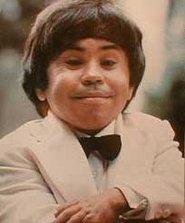
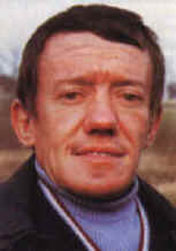
Hervé Jean-Pierre Villechaize (April 23, 1943 - September 4, 1993; pictured above) was a French actor who achieved worldwide recognition for his role as Mr. Roarke’s assistant, Tattoo, in the television series "Fantasy Island" (1978 - 1984). He was also well known for playing the evil henchman Nick Nack in the James Bond film The Man with the Golden Gun.

In the early morning hours of September 4, 1993, Hervé shot himself at his home in the Los Angeles area, and died later that day as a result of his injuries.

Is there a little person actor in Time Bandits who has died by suicide, as Ray mentions? Yes, actually, there is.

Time Bandits is a 1981 fantasy film, produced and directed by Terry Gilliam. It starred several little people or dwarfs.


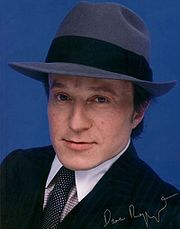
David Rappaport (above) played "Randall" in Time Bandits. David Stephen Rappaport (November 23, 1951 – May 2, 1990) was an English actor, one of the better known dwarf actors in television and film. At one point in his life, he became a resident of the squatter “nation” of Frestonia, acting as Foreign Minister under the name David Rappaport-Bramley - all inhabitants adopted the surname "Bramley," so in case the Greater London Council were to succeed in an eviction, they would have to rehouse them as one family.

On May 2, 1990, Rappaport died by suicide, shooting himself in the chest at a park in the San Fernando Valley, California, with a .38 calibre revolver he had bought 15 days earlier. His body was returned to the UK, and he was buried in a Jewish cemetery in Waltham Abbey, Essex.

Just before his death, he had been cast and began filming for the role of Kivas Fajo in the "Star Trek: The Next Generation" episode “The Most Toys.” Scenes he had completed were later discarded, when actor Saul Rubinek was hurriedly brought in by producers to replace Rappaport and complete the episode. Rappaport’s death and the accident which left Jack Purvis, his co-star, a quadriplegic were the main reasons why Terry Gilliam decided to shelve the intended sequel to Time Bandits, as their characters were two of the most heavily featured in the film.


Ray, during his dwarf suicide monologue In Bruges, mentions the actor who played R2-D2, as still being around. Indeed, Kenneth "Kenny" Baker (born August 24, 1934; above) is still alive. The British dwarf actor and occasional musician, known as the "man inside R2-D2" in the popular Star Wars film series, was also in Time Bandits.

A third suicide victim is alluded to, but the person's name can't be remembered by Ray.

Perhaps this was a play on "never forget the 5th of December," the date the third dwarf killed himself?


Michael Gilden (above) was an American actor (with dwarfism) born September 22, 1962, in Los Angeles, California, who died on December 5th, in Los Angeles, California.

Gilden, a familiar face in recent years, performed in a variety of television series and film including, “NCIS,” “Charmed,” “CSI: Crime Scene Investigation,” “Family Law,” “Cybill,” as well as a role as an Ewok in the film Star Wars Episode VI: Return of the Jedi. In Pulp Fiction, Gilden played the Phillip Morris Page at Jack Rabbit Slims.

Besides being an actor, Gilden was also a stock broker.

He married the now-famous short-stature actress Meredith Eaton ("Family Law," "Boston Legal") on May 20, 2001. He had a previous marriage to a woman named Elena Fondacaro, Verne Troyer's manager. Gilden and Eaton remained together until his death in a suicide by hanging (credit: Emps) at his Los Angeles home on December 5, 2006.

Little people are just people and don't seem to kill themselves at a higher rate than the general population. But In Bruges is merely a movie, right? And the dialogue was placed in the mouth of a murderer. One measures a circle, beginning anywhere, correct?

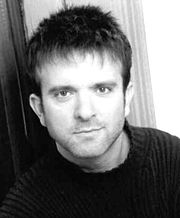
The humor-filled, balanced, horse-tranquilizing dwarf in In Bruges is Jordan Prentice (born January 30, 1973; pictured at the top of this posting), a Canadian actor. When he was 13, he began his film acting when he played Howard the Duck, in the movie of the same name. Perhaps it is fitting that Prentice (playing "Martin") also most recently starred in Weirdsville (2007). Part of the plot is about dumping a body in the basement of a drive-in movie theater where a satanic cult performs ritual sacrifices.

[Upon seeing Martin, the dwarf mall security guard]
Treena: That's so cute!
Martin: Something funny?
Treena: [talking in a little kid's voice] Hi! Who are you supposed to be? You're like the little chief of police of Munchkin Land or something!
Martin: [sarcastically] A Wizard of Oz joke. That's very original. I never hear those.

If we find ourselves going further into Oz (an alternative name for Heath Ledger's Australia, I must note), then we shall be going down that yellow brick road for some time. Enough for us to have visited Bruges today.


Children being killed, dwarfs, suicides, fairy tales, chase scenes through cobblestoned narrow streets, little people in hoods, canals, masks, and a confessed killer sitting in Bruges. What is real and fantasy, film or breaking news?

It all merges into a mind-boggling vortex that would make even a seasoned psychiatric professional question someone telling him these events were actual versus the creations of merely magical thinking.


Wiki-sources, regarding various short-stature actors mentioned:


Friday, January 25, 2008

Dark Deaths Engulf Wales

The Welsh countryside is being visited by dampness, darkness, and death. The spirit and happiness of youthful hope is being snuffed out.

When I wrote my book Suicide Clusters for Faber and Faber (Boston and London) in 1987, few people accepted the reality that suicides clustered. By the time The Copycat Effect came out in 2004, it was taken for granted that suicide clusters existed and do happen.

This week the media began to report on a highly active cluster happening in Wales, in and around Bridgend, a former coal mining community of 40,000, and today the site of a well-known prison.

The death toll went to seven with the latest suicide occurring this Wednesday, when Natasha Randall died by hanging.

In addition to Randall, six men between the ages of 17 and 27 have also been found dead in the area. Authorities have ruled three of the cases to be suicides; the others are under investigation, but suicide is suspected. [See the update at the end, regarding a possible new count of 13 deaths by suicide.]

Let me be clear. From reading about how they all have died, I would say that all seven are suicidal deaths.

Read for yourself, how these associates and friends killed themselves:

Dale Crole, 18, hanged himself at the Coney Beach funfair at Porthcawl, near Bridgend, January 2007;

David Dilling, 19, a former classmate of Dale from Pyle, near Bridgend, hanged himself, February 2007;

Thomas Davies, 20, who had been at school with both Dale and David, found hanged from a tree in David’s home village two days before his funeral, February 2007;

Zachery Barnes, 17, of Wildmill, Bridgend, a friend of Thomas’s family, hanged with washing line, August 2007;

Liam Clarke, 20, a friend of Dale, found hanged in a park in Bridgend, December 2007;

Gareth Morgan, 27, who knew Liam, found hanged in his bedroom, January 2008; and

Natasha Randall, 17, of Blaengarw, Bridgend, a close friend of Liam, hanged herself in her bedroom, January 2008.

The common method hanging unites these deaths in the cluster.

Near Bridgend, from my research, clustering has happened before. In 2003, the Bridgend Samaritans group wanted to put signs at a south Wales beauty spot to persuade suicidal people to call them. Southerndown Cliffs near Ogmore in the Vale of Glamorgan had become a notorious suicide spot, with nine deaths since December 2000. That translates into a cluster of nine jumping deaths between December of 2000 and May 2003 ~ nine deaths in 18 months.

In 2006, the media quoted Philip Walters, the coroner, as saying he was "desperately concerned" about the number of young men dying by suicide in his area (Bridgend, Rhondda Cynon Taf and Merthyr Tydfil). Over an 11-month period in 2006, he said he dealt with nearly one case of suicide per week for men under 30. (If he actually said that, the new 2007-2008 cluster in Bridgend should be no surprise to him.)

In the midst of the 2006 events, a widely reported story was of a Swansea Institute computer student Geraint Banks-Wilkinson, 20, from Nantymoel, who died by hanging on January 13, 2006. His death seemed directly related to his worries about an overdraft at his bank, the Bridgend branch of HSBC. Mr. Banks-Wilkinson's father, Geoff, a prison officer, said of the bank: "The way they treated him was appalling."

Bridgend appears to be one of those communities that has a historical predisposition to clustering and contagion, where suicide is seen as an option for "coping" among vulnerable and hopeless youth.

Now the deaths in Bridgend are front-page news stories worldwide and people are looking to blame someone or something.
"People are saying it might be some sort of cult, but we don't know," said Luke Wills, 25. "There is something amiss, but we don't know what."

Even speculation about a "pact" has been floated about.

"It's nothing like that. What people are saying is not true," said Alicia Johns, a friend of 17-year-old Natasha Randall, who was found dead last week.

"People get down and they do it," she added, saying the young people acted on their own and were not influenced by others. "It's all from the same group, I knew these people."

But this suicide cluster is probably merely being pushed along by the copycat effect, in which the model for suicide among impulsive, action-driven, forlorn youth has now been placed in front of them in an area that has turned grim in a downward economy reinforced in the nearly perpetual damp mists that shroud Bridgend in the long winter months. The darkness of despair can run deep. One need not blame cults, pacts, video games, the internet, or even the media. The gloom is like the fog surrounding one at night in Bridgend, and for many, the modeling of past suicides shout out from those Welsh nights.

Remember, if you live in Wales, don't forget to keep talking to each other and help each other through these dark times.

~ UK Samaritans: 08457 90 90 90 and www.samaritans.org ~

***********
Update: Senior detectives investigating a spate of young suicides in south Wales over the past year are to re-examine the files of 13 deaths in the area - including four cases that are officially closed. South Wales police issued a statement saying: "We will be reviewing a number of cases of sudden deaths in the Bridgend area as part of the investigation process. At this stage, we can't confirm the number or further detail."

According to other sources, among the cases are five involving people aged between 21 and 27, three 20-year-olds, two 19-year-olds, an 18-year-old and two 17-year-olds. All are apparently unexplained and were within the space of a few miles.


Bridgend past

Bridgend, Wales, in calmer days.