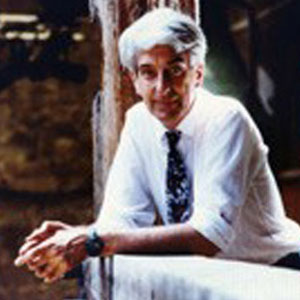
Former Socorro, New Mexico police officer and close encounter eyewitness to one of the most well-known UFO cases in history, Lonnie Zamora died Monday night, November 2, 2009, of heart failure. Socorro investigator Ray Stanford widely informed the ufo community Wednesday afternoon. Stanford received direct confirmation from the Socorro Police Department.

Lonnie Zamora (1933 - 2009) was a New Mexico police officer who reported a close encounter of the first, second and third kinds on Friday, April 24, 1964, near Socorro, New Mexico.
Zamora’s account received considerable coverage in the mass media, and is sometimes regarded as one of the best documented, yet most perplexing UFO reports. It was one of the accounts that helped persuade astronomer J. Allen Hynek that some UFO reports represent an intriguing, unsolved mystery.
 The Encounter
Zamora had been a police officer in Socorro for some years. He was generally regarded as a competent, honest man, though perhaps humorless and overly strict. He was especially known for being tough on speeding motorists.
On April 24, 1964, about 5:45 p.m., Zamora was in pursuit of a speeder. Not long after that pursuit began, he heard a loud sound, which he first thought was an explosion, perhaps from a nearby dynamite storage shack. He abandoned the speeder to investigate.
Southwest of the dynamite shack, Zamora saw what he described as a bright, blue-white “cone of flame”, accompanied by a continual loud roaring sound. He drove towards the light over the rough, dirt road. By the time he crested a tall hill, the flame and sound had both stopped. Zamora said the roar was unlike that of a jet and lasted about 10 seconds from when he first heard it. It went from a high frequency to a low frequency before it stopped.
About 150-200 meters away, he spotted a white, shiny oval object on the ground at the bottom of an arroyo. His first thought was that it was an overturned car. Zamora then noticed two human-like figures near the object. Zamora later wrote that the two figures wore "white coveralls" and were "pretty close to the object on its northwest side, as if inspecting it".
The figure nearest Zamora "must have seen me, cause [sic] when I turned and it looked straight at my car it seemed startled--almost seemed to jump somewhat." He also described the beings as “about the size of boys” but essentially "normal in shape". They were shorter than the small bush they were standing next to, later measured at being about 5 feet high.
Zamora went on to write that he drove closer to the object, intending to offer aid. He radioed police dispatch to inform them he was on the scene of a "possible 10-40" (an auto accident). He would later report that as he got closer to the object, he realized it was not an automobile, nor any kind of conventional craft. He thought the object was perhaps some kind of experimental military craft from White Sands Proving Ground, not far away.
He drove closer to the object, parked it at the edge of the arroyo, less than 100 feet from the craft, then got out of the car for a closer look. Zamora heard two or perhaps three loud thumping sounds, "like someone hammering or shutting a door or doors".
Zamora started to descend on foot down the slope of the arroyo. He noted a red logo or insignia in the middle of the oval object, about 2-1/2 feet wide by 2 feet tall. He also saw what he described as two "legs" supporting the craft. The bottom of the object cleared the ground by maybe 3-1/2 feet.
When he was less than 50 feet away, the object began making a loud noise and a blue-white flame shot from the object’s underside. He later noted that the flame was different from an ordinary flame, lacked smoke, and seemed to penetrate into the soil instead of being reflected off. The flame was tinged orange at the bottom.
The roar started out low frequency and loud, then rapidly increased in pitch and became very loud. He wrote, "Thought, from roar, it might blow up." He dove to the ground and covered his head with his arms. The roar continued, but there was no explosion.
Zamora got up, turned around, and ran panicked back his car, but shot glances over his shoulder to keep an eye on the object as it rose higher. Still quite startled and "afraid of the roar" Zamora ran into his car, stumbled and fell, temporarily losing his glasses. He got up and ran maybe another 50 feet across the dirt road and dove down behind the rise. As he was running and about 25 feet from the car, Zamora glanced back and saw that the object had risen about to the level of the car, or 20-25 feet above the arroyo bottom.
The object continued its ascent as Zamora watched crouched down. He wrote, "The object seemed to lift up slowly" and then flew away. Once it was airborne and began its departure, the roar stopped; it didn't emit any flame, smoke, or sound.
After the craft went silent and started to leave, Zamora quickly ran back to his car, keeping the object in sight. He retrieved his glasses, got into the driver's seat and called in on his two-way radio, all the time watching the object. It initially departed horizontally about 10-15 feet above the ground, rapidly picked up speed, then went into a steep climb as it approached the mountains, fading from view about 6 miles distant to the southwest.
The entire encounter--from his first noting the "explosion" as it landed to the object's flying away over the horizon--had lasted about two minutes. The entire departure--from the time the object cleared the arroyo, went silent, and finally disappeared in the distance-- lasted maybe 10-20 seconds. The latter time can be used to compute an approximate departure speed and has important implications about the nature of the craft.
Not long after the object disappeared, one of Zamora's colleagues, Sgt. Chavez, arrived at the scene. He thought that Zamora was quite disturbed; his face was "white, very pale." Chavez said, "You look like you've seen the devil." Zamora replied "Maybe I have."
Zamora related his account of what had happened, then he and Chavez examined the scene. There were four rectangular impressions in the sand where the object's landing pads had been, plus smaller impressions that Zamora presumed were footprints of the occupants. Some of the nearby shrubs were scorched and smoldering. One of the shrubs near the center of the craft had been sliced cleanly in half. The ground under the craft center was blackened in a circle and some of the sand and rocks had been vitrified.
Though Chavez had known Zamora for years, and judged him a sober, reliable police officer, the story seemed too much to believe. Chavez briefly entertained the possibility that the affair was a hoax, and secretly examined Zamora's car for tools or equipment he might have used to create the physical evidence at the scene (he found nothing of the sort).
A few minutes after Chavez had arrived, several other officials came to the scene after hearing Zamora's call on the radio: Police officers Ted V. Jordan, James Luckie and Cattle Inspector Robert White.
Jordan had a camera and took extensive photos of the scene starting about 10 minutes after the craft left. Jordan would later comment, "The flame from that damn thing just sliced that greasewood bush in half, just burned it off clean like a blade of fire had cut right through it."
The men discussed the encounter, and determined the likeliest explanation was that the craft was from White Sands Proving Ground, though Zamora insisted the craft's occupants were far smaller than adult men. They all left the scene by 7:00 p.m.
Media Reaction and InvestigationsWithin hours, word of Zamora's encounter had reached the news: many people had heard the radio traffic, including a few reporters. Within days, reporters from the Associated Press and United Press International were in Socorro. Members of civilian UFO study group APRO were on the scene within two days, as were officers representing the U.S. Air Force's Project Blue Book. NICAP investigators appeared the following Tuesday. The first NICAP investigator was Ray Stanford, who would later write a detailed book account of his investigation,
Socorro 'Saucer' in a Pentagon Pantry (Blueapple Books, 1976).
 Other Eyewitnesses
Several independent witnesses reported either an "egg" shaped craft, or a bluish flame in roughly the same time and area that Zamora reported his encounter--some of them within minutes of their encounter, before word of Zamora's had spread. Unfortunately, others of these are of limited value, as they were not reported until years after the fact.
Stanford wrote about a number of corroborating witnesses in his book, including two tourists named Paul Kies and Larry Kratzer, who were approaching Socorro in their car from the southwest, less than a mile from the landing site. They apparently witnessed the landing and reported seeing the flame and brownish dust being kicked up. Their story was reported in the Dubuque, Iowa
Telegraph-Herald a few days later after their return.
A family of 5 tourists from Colorado headed north also saw the oval object as it approached Socorro at a very low altitude, going east to west just south of town. It passed directly over their car only a few feet above it. After the encounter, the tourists stopped for gas in Socorro. Their identity was never discovered, but the story was learned from the service station operator, Opal Grinder, who signed an affidavit in 1967. According to Grinder, the husband told him "Your aircraft sure fly low around here!" and that the object almost took the roof off their car. The man thought it was in trouble since it came down west of the highways instead of the nearby airport. He saw the police car headed up the hill towards it, he thought to render assistance, wrote Stanford, see p. 16.
According to Stanford, another witness called an Albuquerque television station around 5:30 p.m. to report an oval object at low altitude traveling slowly south towards Socorro, as per Stanford, p. 82.
Stanford also noted that there were a large number of hearing witnesses to the object's loud roar during takeoff and landing. One member of the Socorro sheriff's office told him that "hundreds of persons" on the south side of town had heard it. Stanford said he personally spoke to two women who heard the roar just before 6 p.m. They said that there were two distinct roars, maybe a minute or so apart, according to Stanford, pp. 85-87.
In addition to the above witnesses, Stanford said there were three other persons who called the police dispatcher immediately following the incident, before it was ever publicized.
U. S. Air Force InvestigationThe evening of the encounter, Army Captain Richard T. Holder (then the senior officer at White Sands, as the higher-ranking officers had gone home for the weekend) and FBI agent Arthur Byrnes, Jr. together interviewed Zamora. Zamora related the speculation that the object was some kind of newly-developed craft being tested at White Sands or at nearby Holloman Air Force Base. Holder shot down this idea, and was later quoted in a Socorro newspaper as saying, that there was in military custody "no object that would compare to the object described ... There was no known firing mission in progress at the time of the occurrence that would produce the conditions reported."
After interviewing Zamora, Holder and several military police officers went to the scene. Using flashlights, they cordoned off the site, took measurements and took samples of the sand and the scorched bushes.
The next morning--a Sunday--Holder took a telephone call from a Colonel at the Joint Chiefs of Staff. As a young Captain, Holder was surprised and nervous to be speaking to such an important high-ranking officer. At the Colonel's command, Holder gave a report of his investigation, over a secure scrambled line. Even years later, Holder would wonder about such important U.S. military officials, "why in the world were they so interested?"
Astronomer J. Allen Hynek (Blue Book's consultant) arrived in Socorro on Tuesday, April 28. He met with Zamora and Chavez, and interviewed them about the encounter. In a memorandum Hynek wrote that "Zamora & Chavez were very anti-AF (Air Force) " The Air Force was suggesting that the affair was a hoax, but Zamora was "pretty sore at being regarded as a romancer" and it took over half an hour for Hynek to "thaw him out" and hear the account from the only eyewitness.
Hynek also wrote that "The AF is in a spot over Socorro:" they were suggesting that the encounter was due to Zamora's having seen an unidentified military craft, though, as noted above, no craft could be matched to Zamora's report. Hynek agreed with many others that this explanation "won't go down" as plausible.
Hynek further wrote "I think this case may be the 'Rosetta Stone' ... There's never been a strong case with so unimpeachable a witness." Also noting his growing frustration with Blue Book, Hynek wrote, "The AF doesn't know what science is."
Eventually, Zamora so tired of the subject that he eventually avoided both ufologists and the Air Force.
The Air Force issued their formal report on June 8, 1964. Jerome Clark in
The UFO Book: Encyclopedia of the Extraterrestrial (Visible Ink, 1998) suggested the report is "riddled with errors," including the claim that there were no other witnesses (several reported their sightings within minutes of Zamora's encounter), and the claim that there were no disturbances to the soil (manifestly false, based on Jordan's photos of the scene taken less than an hour after the encounter). Noting that they made no conclusion as to the object's origin (other than to rule out the Extraterrestrial Hypothesis), the "Air Force was continuing its investigation, and the case is still open."
Blue Book ConclusionProject Blue Book's director, Major Hector Quintanilla (sometimes criticized for a perceived debunk-on-sight approach) said regarding the Zamora case, "There is no doubt that Lonnie Zamora saw an object which left quite an impression on him. There is also no question about Zamora's reliability. He is a serious police officer, a pillar of his church, and a man well versed in recognizing airborne vehicles in his area. He is puzzled by what he saw and frankly, so are we. This is the best-documented case on record, and still we have been unable, in spite of thorough investigation, to find the vehicle or other stimulus that scared Zamora to the point of panic," according to NICAP's report on the case.
Name GameThe name "Zamora," in Spanish, means "from Zamora"; the name, in Hebrew, is translated into English as "praised."

Zamora is a city in Castile and León, Spain, the capital of the province of Zamora. It lies on a rocky hill in the northwest, near the frontier with Portugal and crossed by the Duero river, which is some 50 km/30mi downstream as it reaches the Portuguese frontier.
During the period of Moorish rule the settlement became known by the names of
Semurah or
Azemur. After the establishment of the Christian Kingdom of Asturias, the settlement became a strategic frontier post and was the scene of many fierce military engagements between the Muslims (the Moors) and Christians. Control of the town shifted between between the two sides a number of times from the early eighth century to the late eleventh centuriy. During this period it became heavily fortified.
The most notable historic episode in Zamora was the assassination outside the city walls of the king Sancho II of Castile in 1072. Some decades before, king Ferdinand I of León had divided his kingdoms between his three sons. To his daughter, Doña Urraca, he had bequeathed the "well fortified city of Zamora" (or
la bien cercada in Spanish). All three sons warred among themselves, till the ultimate winner, Sancho, was left victorious. Zamora, under his sister who was allied with Leonese nobles, resisted. Sancho II of Castile, assisted by
El Cid (Spanish article + Arabic,
sîdi or
sayyid = English,
the Lord), lay siege to Zamora.
King Sancho II was murdered by a duplicitous noble of Zamora, Bellido Dolfos, who tricked the king into a private meeting. After the death of Sancho, Castile reverted to his deposed brother Alfonso VI of León. The event was commemorated by the
Portillo de la Traición (Treason Gate). Zamora was also the scene of fierce fighting in the fifteenth century, during the conflict between the supporters of Isabella the Catholic and Juana la Beltraneja. The Spanish proverb,
No se ganó Zamora en una hora, literally,
Zamora wasn't won in an hour, is a reference to these battles. It is the Spanish equivalent of the English proverb "Rome wasn't built in a day."
Zamora, thus, was a fortified city well-known for its resistance to alien invaders, the Moors and others.
The Fourth Kind
Finally, it is to be noted that the movie
The Fourth Kind opens on Friday, November 6, 2009. It is a science fiction/thriller/horror film directed by Olatunde Osunsanmi, and starring Milla Jovovich. The film is purported to be a documentary reenactment set in Nome, Alaska, and deals with alien abductions. The film's promotional material says the title is derived from J. Allen Hynek's classification of close encounters with aliens, in which the fourth kind denotes an alien abduction.
As researcher S. Miles Lewis points out in personal correspondence, this is technically incorrect.
A close encounter of the fourth kind is said to be when a "human is abducted by a UFO or its occupants." But this type was not included in Hynek's original close encounters scale.
Jacques Vallee, Hynek's associate, argued in "Physical Analysis in Ten Cases of Unexplaind Aerial Objects with Material Samples." (Journal of Scientific Exploration. Vol. 12, No. 3., pp. 359-375, 1998) that a CE4 should be described as "cases when witnesses experienced a transformation of their sense of reality," so as to also include non-abduction cases where absurd, hallucinatory or dreamlike events are associated with UFO encounters.
Lonnie Zamora had encounters of the first, second, and third kind.
FuneralRosary for Lonnie Zamora is Friday at 7:00 PM, San Miguel Catholic Church, Socorro, New Mexico. Mass for Zamora will be at 9:00 AM Saturday, same church, with burial to follow.
The funeral arrangements are by: Steadman-Hall Funeral Home, 309 Garfield Ave, Socorro, N. M.